
Folks have asked me why I started WE-Empower. How does a Singaporean American end up in Bali? How does a leadership coach end up thinking about building grassroots enterprises?
This is a story of confluence. When winds shift, we tack.
In March 2020, I was in South Africa coaching high-potential executives of a global financial company when the program was cancelled due to Covid-19. I was about to return to New York City where we’d been living for a decade, when a friend who owned a villa in Bali called: his guests had cancelled, would my partner (originally from Vietnam) and I like to quarantine for a month or two? We took up the offer. Two months stretched into two years. During that time, the geopolitical tides of the world shifted, and we found ourselves reconnecting to Southeast Asia.
Neither of us had grown up thinking about ourselves as Southeast Asian. It is not really an identity, and certainly in the 1960s and ’70s of our youth, we hardly knew what this neighbourhood was about. It was either too troublesome to visit or in some kind of turmoil. Our imagination was focused on the West — to get there, which we both did for different reasons.
Over the years we had often visited Vietnam and Singapore. We had even started a non-profit with friends, SEALNet (the Southeast Asian Service Leadership Network), which for nearly two decades brought Southeast Asian undergraduates studying in the USA back to work on service projects in the countries of the region. We had been connected to the neighbourhood, but home was still America.
Now, with shifting winds, we felt called to make this neighbourhood our home.
As leadership coaches, our work continued online, but we began having regional clients, many running family businesses. We started moving into the succession space — helping families with their inter-generational dynamics, something we both still do.
In 2023, I started WE-Empower by asking a client for a donation. The mission was for business families to empower grassroots enterprises, with a focus on climate change. President — then DPM — Tharman Shanmugaratnam of Singapore was our Guest of Honor when we launched.
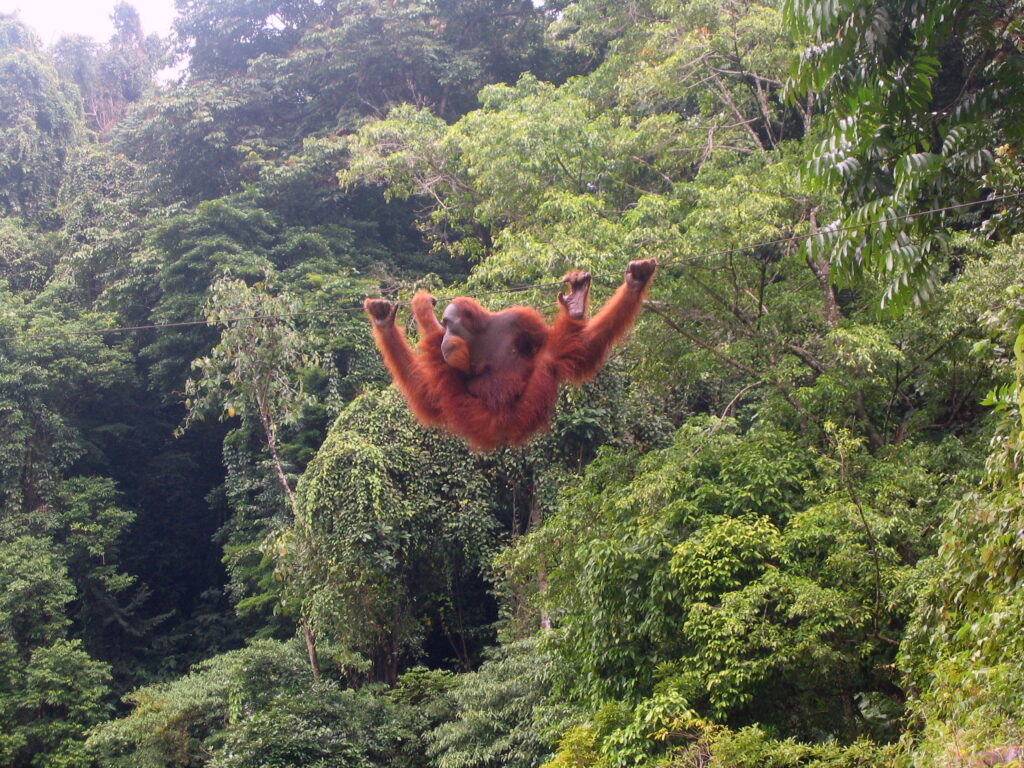
With a fellow UWC alumnus, I visited Leuser National Park in Aceh, Sumatra, with a view to funding restoration of depleted lands with bamboo. The forests of Leuser, where endangered orangutans and white rhinos still live, were being systematically reduced. Palm oil plantations had cut into them, and the lowlands were flooding. Palm oil is here to stay — it is one of Indonesia’s largest foreign exchange earners and a common ingredient in hundreds of products. There is no good substitute. But people living next to the forests were often tempted to go in: cut timber for sale, poach animals, plant a few oil palms they could harvest. Cash was what they needed — for school, clothing, medicine, gasoline. Food they could grow. Each time a migrant labourer from a village fails to send back enough money, family members turn to the forest.
For the vast majority of millions of people in Southeast Asia living next to forests or the sea, nature is their bank of last resort. When they cannot find employment in the modern economy, they take bits and pieces from it. (Industrial-scale extraction is the larger problem, not the rural people taking — but that is an issue I am not addressing here, because I do not know how.)
Bamboo could do two things. It could restore degraded land over five to seven years, leading to soil conservation, flood prevention and reforestation. And it could give villagers a living — first through donations to plant, then eventually through harvesting for sale. The forest can then be an investment instead of a bank they drain.
As shifting winds would have it, the donor changed their priorities, and we could not fund the project. But I had learned the lesson that has shaped WE-Empower since. Making a living is the number one priority for the vast majority of people. It is not about saving for university; it is more basic — buying a tin roof, medicine for a sick child. They need viable businesses to run, or to employ them. Grassroots enterprises — micro, small, and medium-sized — are the key to human survival in this region, to addressing climate change, and to political stability itself.
In my coaching work, I had been focused on business families and Next Gen succession — a concern there as in any company. Twenty-five years of executive coaching had also meant designing leadership courses for high-potential executives at multinationals and professional services firms. I started designing a six-month action learning program for Next Gen of business families, where younger people being considered for leadership roles might gather with peers from other families to work on real projects. As I developed it, I realised: why keep this to Next Gen alone? Why not open it to anyone with the right traits?
The research on what makes high-potential programs succeed — and what makes them fail — is extensive. Five behavioural traits emerge as predictive, in roughly this order of priority. The first is the strongest signal: when challenged or contradicted, does the person open or close? Do they ask, update, and engage, or do they restate, defend, and withdraw? This is the behavioural face of learning agility under pressure. The second is curiosity — not as expressed interest, but as the active pursuit of questions one cannot yet answer, accompanied by attention to fields outside one’s own. (Confluence!)
The third is self-awareness: accurate perception of oneself as others perceive one, with willingness to update from feedback. The behavioural anchor of humility. The fourth is a reciprocal mindset — strategic generosity, distinct from selfless altruism (which depletes the giver) and from transactional exchange (which does not compound). The fifth is drive — but qualified: drive in service of what? Toward enterprise, community, craft, or movement, or toward personal visibility alone? Drive in isolation is the strongest derailment signal in the leadership literature.
All five are necessary, and each population I have worked with faces a characteristic challenge. In successful executives, drive can turn dark, inward, after too much success. In Next Gen of business families, self-awareness and reciprocity are stunted by privilege. In grassroots founders, curiosity is often the trait stamped out by conservative upbringing and the pressures of survival. Each group needs the others’ presence.
WE-Empower is a project to identify those in any walk of life who already carry these traits, and to convene them — to create campuhan between them, a container in which they can practise these traits together, and have some fun doing it.
The enterprise builders and support partners we have piloted with already have these traits. Over time, we expect to get better and better at curating and selecting people who do.
My vision for WE-Empower is that in a few short years we will have the expertise and the proof that these confluences are creating better businesses that build better lives. And better lives means climate mitigation and social justice. And then we have a movement.
Sitting in the Aceh rainforest, I realised Singapore is much closer to Aceh than Aceh is to Jakarta. Yet the wonderful durians we found in abundance in Medan could not be shipped to Singapore — which, before English and Dutch colonisation divided the Straits of Malacca, would have been an easy hop. If the villagers surrounding the rainforest were to be incentivised to stop burning — whose smog affects Singapore — they would need livelihoods. But they cannot get forest products to markets in Singapore, because of barriers created by colonial and national flags. Yet the externalities of modernisation — fires, smog, rising floods — do not respect those barriers.
It struck me, sitting there, how rarely we think of ourselves as interconnected in Southeast Asia. I have been guilty of this myself. Singapore has the technology to protect itself from rising seas, and Singaporeans of my generation grew up looking at the West, then at China — not at our own neighbourhood. The same is true across the region. We have not yet learned to think of interconnectedness as a resource, a reality, and an economic potential that can ripen.
If there is to be a nature-based solution, then we need to look at nature writ large. The monsoon rains water every rice field from Laos down to Java. Orangutans once moved freely across the entire archipelago, and birds still pollinate forests from north to south, east to west. The oxygen coming from the Leuser forest — the largest mid-level intact forest in the region — was oxygenating Singapore and Johor as I sat there. Can the capital from those places oxygenate the villages in return?
There was one evening when I was concerned about Aceh separatists. Our contact looked at me, smiled, and said: “Look around you. These forest rangers working to catch poachers are all ex-guerrillas. We are now protecting the forests, because we can make a living through donations from major NGOs. And — please help us launching viable businesses.”
That visit two years ago has stayed with me. I was unable to give them a donation. Even so, I also understood that donations get depleted. What is needed is something more sustainable — what we now call our EMAS Exchange Fellowship: an exchange program pairing outside support partners with local enterprise builders, walking alongside them for a season.
What is also needed is a change of mindset and eyesight. We need to literally see Southeast Asia as interconnected, interdependent, and home. Hence a different name.
Bumantara.
We are Bumantarans. We share Bumantara with orangutans and forests, with monsoon rains and rice fields. This is a perceptual and spiritual attitude, and it need not be dismissed as merely poetic. MSMEs are poetic and practical — they are real businesses, the effective mitochondria of the regional economy.
Years ago at Harvard Divinity School, I tutored sophomores at Adams House who were studying economics. We looked at what economics actually means. Eco comes from the Greek oikos — household. From the same root we get ecumenical (the wide household of different faiths), ecology (the biosystem we live in), and economics (the management of our material life). There is no real division between society, nation, business, and spirit.
The orangutans — the Tree Dwelling People — will tell you so, if you listen to them.
By Leng Lim.